Curiouser and Curiouser
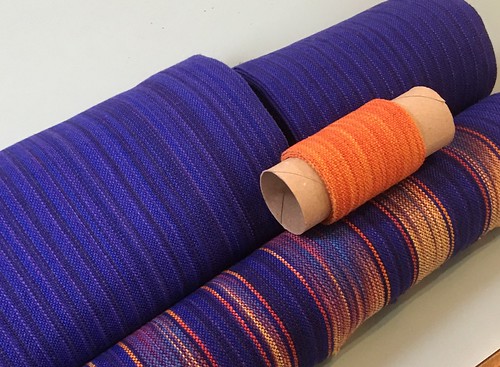
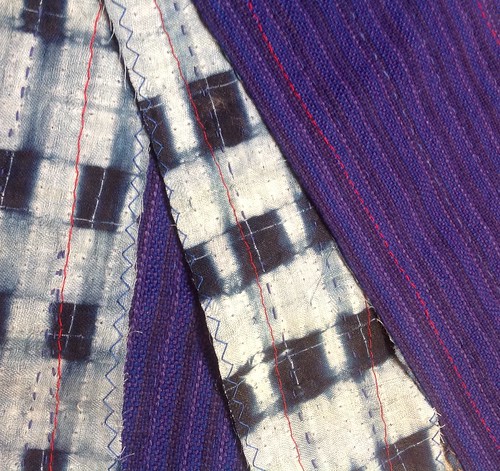
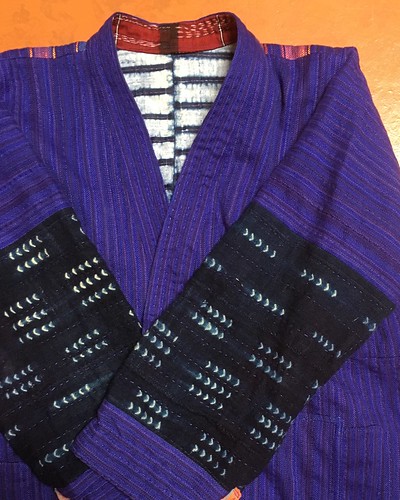
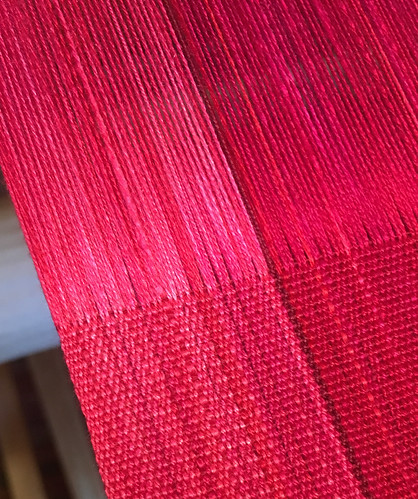
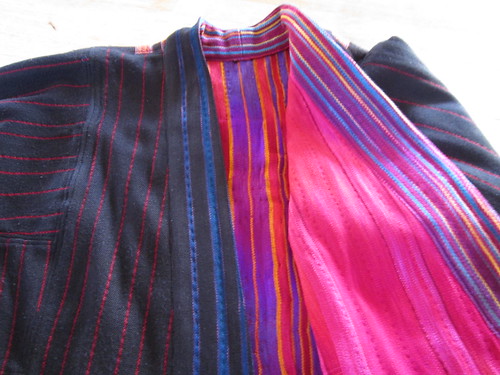
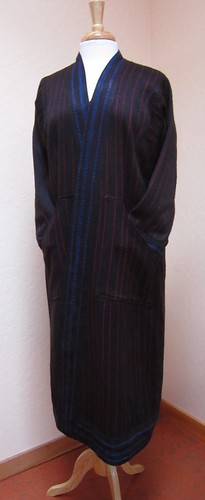
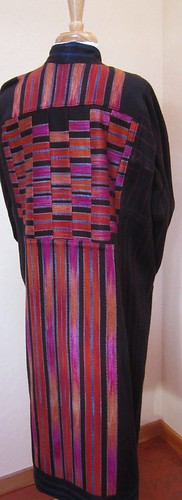
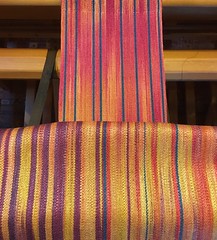
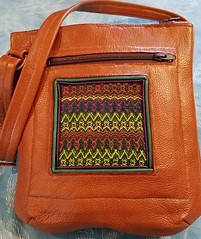
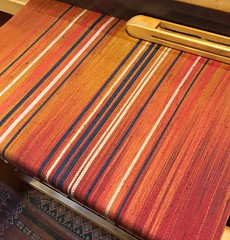
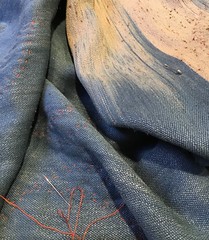
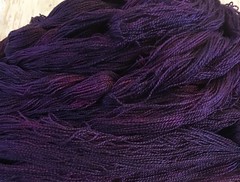
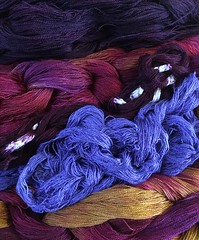
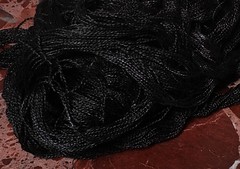
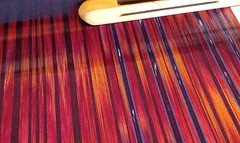
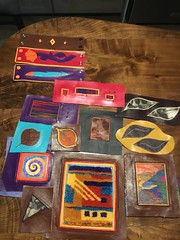
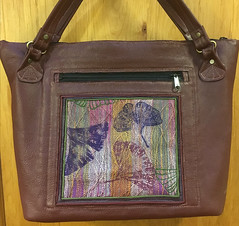
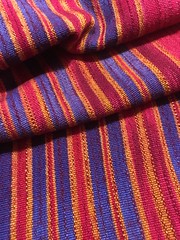
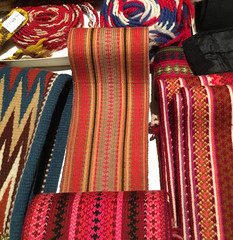
Gratuitous photo, unrelated (somewhat) to the following:

Most of the time, when one is a teacher of anything, one is well versed in the subject one is teaching. This makes perfect sense right?
There are different learning and teaching styles, as a given, and some teachers reach some learning styles better than others. The kinetic learners (aren't we, fiber people, all?) the aural learners and the visual learners pose different challenges in a classroom situation, and the dance is to find out how to teach them all.
I like being a part of a classroom full of fiber people, the excitement, energy, general goodwill and fun of being with people who like what we all do. I so look forward to classes I'm taking, and teaching.
But what if the learning is not face-to-face, but just words and pictures online? or by DVD? or You Tube? How do you vet a teacher? How do you know someone is not wasting your time? By their reputation?
What about all the learning that goes on between students, not just direct information presented to the class, but the sidelines, the digressions and the personalities in class? I would miss that. Some online classes have the benefit of sharing among the students, but that can be burdensome, chatty, off-topic overkill too.
Knitting is often taught pattern by pattern (take this sock class, or this class on making gloves, this class on this sweater using this yarn, etc.). Does this lead to teachers who have never done original work? I'm guessing so, since I have known some teachers who follow patterns (and do it well), know how to modify patterns to fit different bodies, yarns, whatever, but have not designed anything from the yarn (or fiber) up.
Many people (myself included) learn lots of techniques from following a pattern. Good patterns do just that: the designer has tricks worked right in, shaping, cast ons, hems, tricks, decreases expertly placed, all to help the knitting be more than a cut and sew garment. So is the designer the teacher, then, and the teacher presenting the ideas of the designers?
I've always aimed for teaching the technique, not following a pattern necessarily. I teach spinning, dyeing and weaving, and there are very few patterns, per se. One of the skills we try to teach is the critical thinking needed to achieve a goal (how do I get sock yarn? How do I get that color? How do I make determine how to weave fabric like that?). There are just too many variables to have everyone trying to achieve the same exact outcome.
I have had to create patterns that will teach the skills I want to pass on, so indeed, we are learning from a pattern. My hope is that people still leave the class with enough skills to create original work. That's my goal.
It may not be the goal of the person taking the class though: they might just want to try out a technique and see if they want to continue with it. I get people in classes who never do the technique again. I try not to blame myself for this: I do tend to teach esoteric weaving skills. Not much call for your esoteric weaving skills in this modern world, unless for some reason they happen to resonate, in which case they are then fun, as they are for me, and I'm all about sharing the fun.
As a student though, how do we know how the teacher will be? How do you decide, when choosing a teacher, on whom to trust with your hard-earned dollars (or Euros or Yen)? Do you follow the crowd? Do you take other people's recommendations? Do you decide based on work or articles by the teacher that you've seen or read?
I puzzle through this often. I rarely take a class from someone I have never heard of, but with the internet(s) we *hear* of just about everyone, and mostly in glowing terms. Lately there have been a few snafus where the internet(s) have ferreted out some poseurs (thank you Ravelry), but for the most part, everyone is happy-happy-no-critiques online. So how do you gauge (hah!) the truth through all the fawning?
I've taken far more weaving and spinning classes than knitting classes, and the weaving world is a little smaller. There are fewer new entries in the teaching-about-weaving world than there are in knitting, where everyone can teach someone as soon as they know two things. In fact, I'm signing up for a weaving class next January, at GGFI, just because I want to learn from someone I've never met, never heard of anyone who has taken the class, but whose work online looks fabulous.
It is hard to be a trailblazer, and try out new teachers. We recently had a conference where the organizers wanted to have all new teachers, people who may not have taught here before. Sign ups for the seminars were great (comes with conference registration) but the workshops were under-subscribed (costs extra). By all accounts, they were fabulous teachers, their work was good, their lectures and seminars were well received. But people did not know who the teachers were, what there work was like, how they managed their classes etc, before the conference. If those same teachers came back, I'm sure there would be far more interest and sign ups because now we know, now we have heard, now we have word-of-mouth, now we have testimony.
Some conferences try to balance the old and new teachers and class offerings, and I think that is the key: SOAR usually has someone entirely new along with some tested veterans teaching. GGFI has done this too, even though it is a brand new conference: several road-tested teachers and some that are new on the scene. This gives attendees the confidence to sign up for someone new, knowing that there is also the opportunity to balance that with a known entity.
Spinning is starting to burgeon, and with this comes the You Tube videos, DVDs, classes at local knit shops, a whole new crop of Spinning Teachers. How do we decide who has something to say? Does it matter? I learn something from every teacher I've been privileged to sit with, perhaps off the syllabus, but still...
We need new teachers. We need new viewpoints, new perspectives, new twists on old techniques. Someone has to vet them, and I guess there is a winnowing process of sorts by word of mouth or by work done and seen. There is certainly very little winnowing online. Everyone can be an expert. Until they are not. Then they are the latest cautionary tale.
Interesting. I am working long hours in the studio, and ruminating. Can you tell? Thoughts?

Most of the time, when one is a teacher of anything, one is well versed in the subject one is teaching. This makes perfect sense right?
There are different learning and teaching styles, as a given, and some teachers reach some learning styles better than others. The kinetic learners (aren't we, fiber people, all?) the aural learners and the visual learners pose different challenges in a classroom situation, and the dance is to find out how to teach them all.
I like being a part of a classroom full of fiber people, the excitement, energy, general goodwill and fun of being with people who like what we all do. I so look forward to classes I'm taking, and teaching.
But what if the learning is not face-to-face, but just words and pictures online? or by DVD? or You Tube? How do you vet a teacher? How do you know someone is not wasting your time? By their reputation?
What about all the learning that goes on between students, not just direct information presented to the class, but the sidelines, the digressions and the personalities in class? I would miss that. Some online classes have the benefit of sharing among the students, but that can be burdensome, chatty, off-topic overkill too.
Knitting is often taught pattern by pattern (take this sock class, or this class on making gloves, this class on this sweater using this yarn, etc.). Does this lead to teachers who have never done original work? I'm guessing so, since I have known some teachers who follow patterns (and do it well), know how to modify patterns to fit different bodies, yarns, whatever, but have not designed anything from the yarn (or fiber) up.
Many people (myself included) learn lots of techniques from following a pattern. Good patterns do just that: the designer has tricks worked right in, shaping, cast ons, hems, tricks, decreases expertly placed, all to help the knitting be more than a cut and sew garment. So is the designer the teacher, then, and the teacher presenting the ideas of the designers?
I've always aimed for teaching the technique, not following a pattern necessarily. I teach spinning, dyeing and weaving, and there are very few patterns, per se. One of the skills we try to teach is the critical thinking needed to achieve a goal (how do I get sock yarn? How do I get that color? How do I make determine how to weave fabric like that?). There are just too many variables to have everyone trying to achieve the same exact outcome.
I have had to create patterns that will teach the skills I want to pass on, so indeed, we are learning from a pattern. My hope is that people still leave the class with enough skills to create original work. That's my goal.
It may not be the goal of the person taking the class though: they might just want to try out a technique and see if they want to continue with it. I get people in classes who never do the technique again. I try not to blame myself for this: I do tend to teach esoteric weaving skills. Not much call for your esoteric weaving skills in this modern world, unless for some reason they happen to resonate, in which case they are then fun, as they are for me, and I'm all about sharing the fun.
As a student though, how do we know how the teacher will be? How do you decide, when choosing a teacher, on whom to trust with your hard-earned dollars (or Euros or Yen)? Do you follow the crowd? Do you take other people's recommendations? Do you decide based on work or articles by the teacher that you've seen or read?
I puzzle through this often. I rarely take a class from someone I have never heard of, but with the internet(s) we *hear* of just about everyone, and mostly in glowing terms. Lately there have been a few snafus where the internet(s) have ferreted out some poseurs (thank you Ravelry), but for the most part, everyone is happy-happy-no-critiques online. So how do you gauge (hah!) the truth through all the fawning?
I've taken far more weaving and spinning classes than knitting classes, and the weaving world is a little smaller. There are fewer new entries in the teaching-about-weaving world than there are in knitting, where everyone can teach someone as soon as they know two things. In fact, I'm signing up for a weaving class next January, at GGFI, just because I want to learn from someone I've never met, never heard of anyone who has taken the class, but whose work online looks fabulous.
It is hard to be a trailblazer, and try out new teachers. We recently had a conference where the organizers wanted to have all new teachers, people who may not have taught here before. Sign ups for the seminars were great (comes with conference registration) but the workshops were under-subscribed (costs extra). By all accounts, they were fabulous teachers, their work was good, their lectures and seminars were well received. But people did not know who the teachers were, what there work was like, how they managed their classes etc, before the conference. If those same teachers came back, I'm sure there would be far more interest and sign ups because now we know, now we have heard, now we have word-of-mouth, now we have testimony.
Some conferences try to balance the old and new teachers and class offerings, and I think that is the key: SOAR usually has someone entirely new along with some tested veterans teaching. GGFI has done this too, even though it is a brand new conference: several road-tested teachers and some that are new on the scene. This gives attendees the confidence to sign up for someone new, knowing that there is also the opportunity to balance that with a known entity.
Spinning is starting to burgeon, and with this comes the You Tube videos, DVDs, classes at local knit shops, a whole new crop of Spinning Teachers. How do we decide who has something to say? Does it matter? I learn something from every teacher I've been privileged to sit with, perhaps off the syllabus, but still...
We need new teachers. We need new viewpoints, new perspectives, new twists on old techniques. Someone has to vet them, and I guess there is a winnowing process of sorts by word of mouth or by work done and seen. There is certainly very little winnowing online. Everyone can be an expert. Until they are not. Then they are the latest cautionary tale.
Interesting. I am working long hours in the studio, and ruminating. Can you tell? Thoughts?